
Rapides Parish Weekly Arrest Sources
RPSO posts no official seven-day or 72-hour booking table. Its closest multi-day source is the press-release archive. It holds 92 selected items dated June 3, 2025 through August 27, 2026. An entry may carry a title and a timestamp. It may also hold an account of an investigation or arrest. Some include an image. Think of these as editorial agency releases, not a roll call of everyone booked.
Read the archive beside the current Rapides LAVNS roster and the originating agency. Several agencies post announcements tied to Rapides Parish. Alexandria Police, Pineville Police, Ball Police, Louisiana State Police, RADE, probation and parole, and federal partners all take part. None of them guarantees a weekly arrest log. What you get is a sourced timeline, never an invented master list.
Read the Rapides Arrest Blotter
Work backward through the dates, but keep every source in its lane. A news timestamp shows when the item was posted. A booking date marks jail processing. An arrest date can point to an earlier event. Court filings and hearings belong to the case after the arrest.
- Search the RPSO release archive for the relevant week, name, agency, place, or operation.
- Open the original agency release and write down its publication or update time.
- Separate the reported arrest date from any booking, bond, or court date stated in the item.
- Check the official Rapides LAVNS roster for current custody, knowing that a released person may no longer appear.
- Use the named police agency or RPSO for the initial record and booking sheet.
- Follow the case through the Rapides Clerk, 9th Judicial District Court, or Alexandria City Court when applicable.
For fresh bookings, the Daily Arrest Report covers the app-configured endpoint and roster workflow. A weekly review has a different goal. It rebuilds several days without treating a story, a roster row, and a court docket as the same thing.
Rapides Arrest Log Entry Fields
No single weekly schema exists in Rapides. The table lists common fields and the source that establishes each one. Leave blank data blank. Never fill in RPSO as the arresting agency just because parish custody shows up elsewhere.
| Entry field | How to read it |
|---|---|
| Name | Match spelling against the original source and another identifier; a name alone is not enough. |
| Publication timestamp | Shows when a release or story appeared, not necessarily when arrest or booking occurred. |
| Arrest or booking date | Use the label supplied by the source. Do not merge these distinct events. |
| Arresting agency | Use the agency credited in a release or record; the detention custodian may differ. |
| Charge | An charge as reported or booked. Wording can change as the case proceeds. |
| Bond | A time-sensitive amount or status that may change after the story was written. |
| Facility or custody | Verify through the current official channel; three Rapides detention centers are listed. |
| Image | Optional in releases and news. It is not a stable official booking-photo field or evidence of guilt. |
Booking numbers and case numbers matter most because they steer later requests. They belong to different systems, though. A jail booking number is not the clerk's case number. Neither one states the final disposition on its own.
Rapides Weekend Arrest Reporting
RPSO, APD, PPD, and Ball Police follow no published weekend or holiday release rule. A missing Saturday post never means no weekend arrests happened. A Monday roundup may blend several days. It may also sum up an operation that began much earlier.
Timing splits the events even further. Booking happens first. An agency release may wait for review, and a newsroom publishes once the statement lands. The roster shifts as people post bond, transfer, or leave custody. A court docket shows up later still. Record each source time. Treat the sequence as separate observations, not one synchronized feed.
Rapides Multi-Agency Arrest Operations
Rapides works as a multi-agency operation map. A KALB report on a RADE operation described wide work. RPSO, municipal departments, and Louisiana State Police took part. So did probation and parole and communities across Rapides and Grant parishes. That structure explains why one entry can carry three distinct geographic labels. One is the city tied to the event. Another is the agency that made or announced the arrest. The third is the facility holding the person.
Keep those labels intact. Alexandria, Pineville, and Ball each lack a live booking table, and a parish roster is not a city police log. An operation can cross jurisdictions. A state or federal hold may reroute the custody path. If the story never names the facility, do not guess among Rapides Parish Detention Centers I, II, and III.
Totals demand care too. A story may count people, warrants, charges, searches, or arrests under one operation name. Those figures cannot be mixed with the names on a later roster. Follow the article's exact wording and check the agency statement behind it.
Rapides Arrest News Context
The KALB crime index offers rolling, dated, agency-attributed coverage from Rapides Parish and nearby communities.

News coverage adds color that a booking roster cannot. The Rapides Parish Journal runs single arrest stories and roundup pieces. Expect booking dates, locations, and sometimes bail figures. It is story-driven rather than daily. The Town Talk covers crime and courts too. Neither outlet posts a steady booking photo roster. Still, for context around an arrest in Rapides Parish, both are worth a look.
Regional Rapides Arrest Coverage
The KPLC regional crime page can carry Rapides stories and republished Central Louisiana reporting.
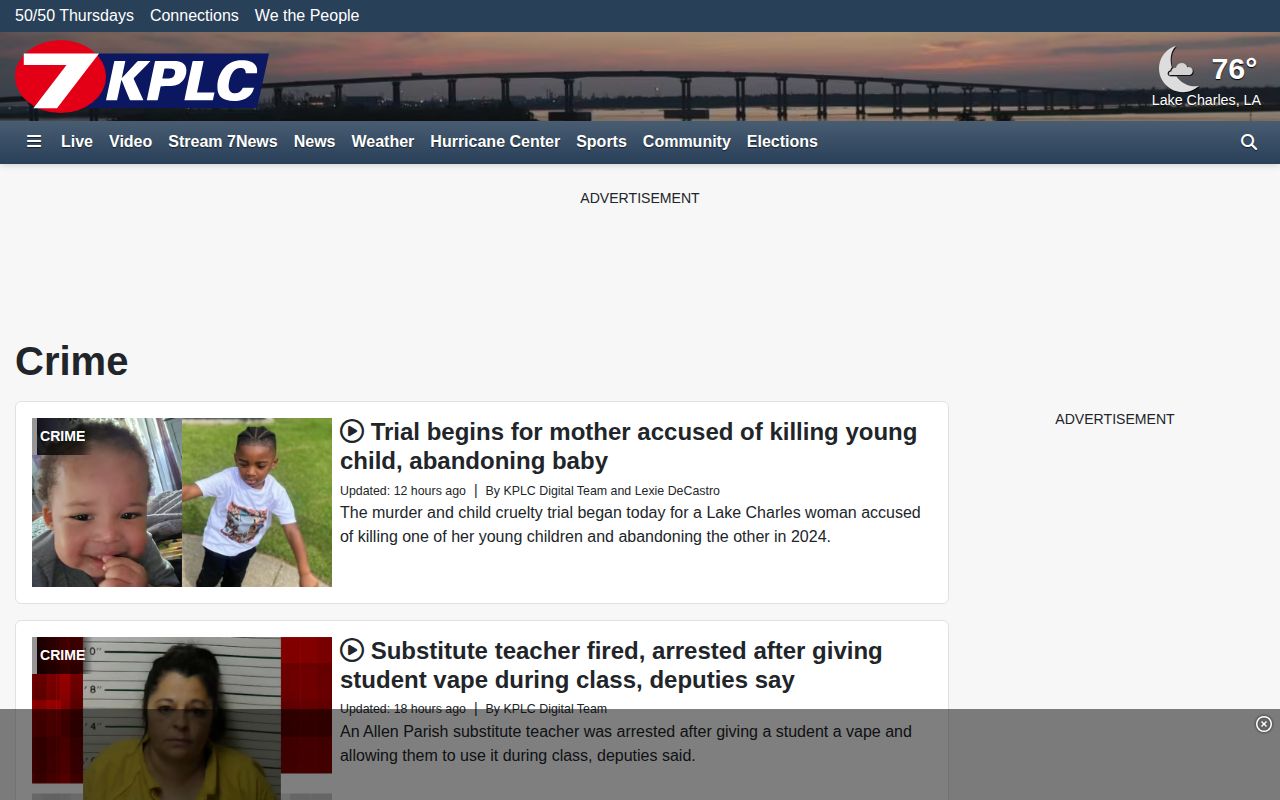
A broader regional index sits alongside the local outlets. Treat it as a secondary news lead. It is not a Rapides-only arrest log.
Official sources still come first. News can explain why several agencies joined an operation, what it targeted, or which office spoke. It cannot establish current custody. Check that through RPSO/LAVNS or LA VINE. The court confirms the outcome.
When Rapides Bookings Reappear
The Public Jail Records page carries a warning. A name can appear twice. Transfers and failures to appear both cause rebookings. A repeat entry in a Rapides Parish list is usually paperwork rather than a second new crime. Check the event type before assuming anything. The agency record and the docket do settle it. A failure to appear means a missed court date, and a transfer is just movement between custody settings. Each rebooking stamps a fresh timestamp on an old event. Third-party arrest sites age badly. RecentlyBooked shows only the last 30 days, while Busted Newspaper and Mugshots.com hold far deeper archives. Mugshots.zone leans historical, and Jail Rosters Louisiana mirrors dated snapshots. None of these unofficial pages follows the sheriff's schedule, so a Rapides entry there can be stale, incomplete, or wrong. The sheriff's office, the arresting agency, and the court always outrank them.
Rapides Arrest Archive Limits
RPSO sets no roster roll-off rule. How long a Rapides arrest stays visible is simply not written down. Louisiana R.S. 44:36 sets a preservation baseline. It generally demands three years where no other period applies, yet that rule governs paper and files, not web display. Online roster rows, agency retention, court retention, and third-party copies each live on their own clock. A booking can vanish while the file survives. Ask the office directly. Which record series holds the booking sheet or photograph, what retention schedule applies, and whether the file is active or stored are all fair questions. The arresting agency may hold more. If APD, PPD, Ball Police, LSP, or RADE made the arrest, that office can have its own initial report. Request electronic delivery. Ask for a written legal basis for anything withheld. The Louisiana State Archives is the wrong first stop for a current Rapides booking, since its catalog and Research Library serve older state collections and its Records Center holds inactive state-agency records. Start with RPSO, the arresting agency, the Rapides Clerk, and the court, and follow an archive transfer only when a custodian names one.
Note: an old news or mirror page can persist after release, correction, sealing, or disposition and does not prove current custody.
Request an Older Rapides Record
Point your request at one event. Give the full name. Add the approximate arrest or booking date, the arresting agency, a booking number, and a case number if you have one. Name the item you want. A booking sheet, an initial report, charge and bond fields, facility information, or a photograph beats a request for a whole database. Ask, too, whether anything cut from the response rests on a stated legal exception. Louisiana law treats records broadly. Photographographs and electronic data can count as public, though law-enforcement boundaries still shield investigative details, juvenile material, and other exempt content. Public does not mean posted. A booking photo may take its own request. Release is never guaranteed. Once a case is filed, the Rapides Clerk and 9th Judicial District Court carry it forward, with Alexandria City Court holding qualifying city misdemeanor or ordinance matters. The disposition, whether dismissal, plea, acquittal, or judgment, tells you what actually followed the arrest.
Rapides Arrest Log Cautions
A Rapides arrest log is a snapshot, not a history. Charges change as cases move, and headlines rarely catch up. Old news stories stay online long after a case turns. The roster keeps only current custody. A released person's row simply drops off. When matching a name, add a second identifier. Skip full birth dates, home addresses, and anything touching victims, medical care, or juveniles. Booking photos belong in records, not galleries. Use the court file, not the headline, as the source of what happened.
Public Record Search
Sponsored Results